.jpg?h=600&iar=0&w=900&hash=027542A2AD3C3995ADCC787184E6FCDE)


As the concept of ‘home’ evolves, so too are the people shaping it – but are marketers ready? In a world defined by rapid change, homes are being reimagined. Household structures are shifting; aspirations evolving; new global uncertainty intensifying; and technology is transforming the very fabric of modern living.
The home has never been more multidimensional nor more central to the rhythms of living. It is simultaneously our workspace and our refuge: a hub for wellness and a catalyst for joy. It holds our relationships, routines and values, and brands must work harder than ever to keep pace.
To prepare for what comes next, marketers must understand who is shaping the future of the home, what they will seek from it and how home life itself will be reshaped. These people are the Home Shapers.
What do we mean by ‘Home Shapers’?
A Home Shaper is anyone who actively defines how a home works: defining its routines, rituals, decisions and boundaries, regardless of age, gender or ownership. This marks a shift from the old, historically gendered idea of ‘homemakers’ – women carrying the entirety of the domestic load – that that no longer reflects how many people live today. Homes and the people inside them simply don’t fit old blueprints anymore. To understand who’s shaping the homes of the future, we must move away from the language of the past.
Understanding the home of the future through collaboration
To explore this emerging world, Unilever Home Care and Kantar convened a powerhouse group of future focused partners (including Vodafone, Google, Unilever Foods, PepsiCo and a multinational furniture brand) in a purpose built Co-Lab, designed not just to surface powerful insights, but to actively disrupt and shape the future together.
We blended strategic foresight, horizon scanning, behavioural insight and live co-creation, consulting with architects, designers, ethnographers, technologists and academics across markets. The result is a sharper, more human picture of what the future home could become, based on evolving Home Shaper needs and behaviours and a collective ability to influence it, not simply anticipate it.
The world outside is reshaping our homes
The forces reshaping home life are far bigger than décor trends or TikTok DIYs, requiring a broader view of the macro forces of change that are impacting how we live and what we seek from our homes.
The shape of the global population is changing. Falling fertility, ageing populations in many markets, rising youth in some emerging regions, and rapid urbanisation are all reshaping where and how people live. Shifting demographics are redefining household makeup and the needs, values and behaviours within the home.
People are rewriting traditional life scripts: looking beyond the old milestones of marriage, ownership or parenthood to define success in more fluid, personal terms. This in turn is impacting directly on how they choose to live and what ‘home’ means to them.
From the economy to the climate, uncertainty has become a constant backdrop, triggering people to look for more security, comfort and stability from the spaces they live in.
Meanwhile, technology continues to accelerate expectations. With AI, automation and connected systems becoming part of daily routines, our homes are becoming more active participants in our wellbeing, and more proactive in meeting all our needs.
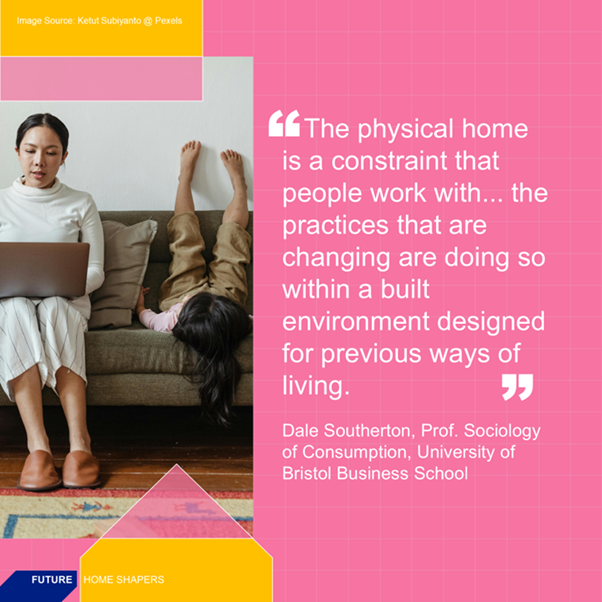
But despite these changes in the makeup of households and families, these shifts exist within a world of old, slow-to-adapt housing stock. What our homes mean to us and how we use them will evolve faster than the physical space itself.
So who are the Future Home Shapers?
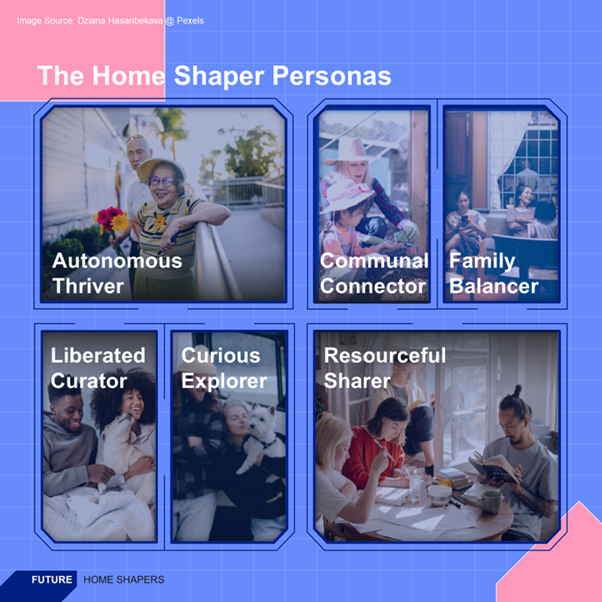
The Co-Lab identified six Home Shaper mindsets grounded in attitudes, not demographics – helping us design for how people think and act, not the boxes they tick.
Some will live as Liberated Curators, designing life on their own terms with no desire for compromise. Others will be Autonomous Thrivers, prioritising self reliance and independence. Many will juggle complex family routines and multi-generational needs as Family Balancers, while Communal Connectors shape their homes through intentional community and shared values.
A growing cohort of Resourceful Sharers will be forced to compromise on home ownership and privacy in shared spaces, pooling resources to live the lifestyle to which they aspire. And the globally mobile Curious Explorers will expect to make ‘home’ anywhere, with environments adapting around them.
Understanding these Home Shaper personas is essential to opening new audiences and new opportunities when thinking about the consumers of tomorrow.
The emerging needs of Future Home Shapers
- Reconnection Imperative
As loneliness rises and third spaces within homes shrink, people want spaces that foster togetherness. Not by accident, but by design: homes that spark meaningful moments, deeper relationships and richer interactions.
"As third spaces erode and digital life dominates, the home is becoming one of the last frontiers for real belonging." - Philippa Wagner, Founder at PeoplePlacesSpaces
- Investing in Joy
In a world that often feels heavy, home must counterbalance the weight. People increasingly seek playful rituals, creative outlets and moments of delight. Not as luxuries, but as essential emotional fuel.
- The Wellness Agenda
Homes are no longer passive sanctuaries. They must actively support physical, mental, emotional and spiritual health through adaptive design, sensory environments, connection with nature, rest, restoration and smart systems that reduce stress.
- Dependable Haven
As trust in institutions erodes, people look inward. They want homes that protect, prepare and empower: through self-sufficiency, control, reliability and resilience.
- Harmonious Living
Dual-earner households are now the norm, but domestic responsibilities remain stubbornly uneven, despite a desire for more balance. People need systems and tools that simplify complexity, redistribute load and reduce friction, both emotional and practical.
- Adaptive Fluidity
Permanence is no longer guaranteed. Homes must keep pace with lives that change shape frequently, supporting work, care, rest, mobility and multigenerational living within tighter, more modular spaces.
Shaping the future home, together
One of the clearest lessons from this work is how much value can be gained by coming together from across industries and shaping, challenging and stretching our ideas together.
The Co-Lab proved the power of working differently: sharing expertise, pooling budgets, challenging assumptions, building one combined perspective instead of many fragmented ones.
As we move from foresight to action, the questions become bigger:
- Are we designing homes and experiences for how people used to live, or for how they will live next?
- What parts of the home experience are we still treating as fixed, even though people’s lives are now fluid?
- How can we move from easing chores to enabling fulfilment? From solving problems to shaping possibilities?
Unsure how to navigate this evolving landscape? Want to learn more about how your brand can design for this evolution? Or have a different Co-Lab in mind? Get in touch with me or Alex Dewdney.